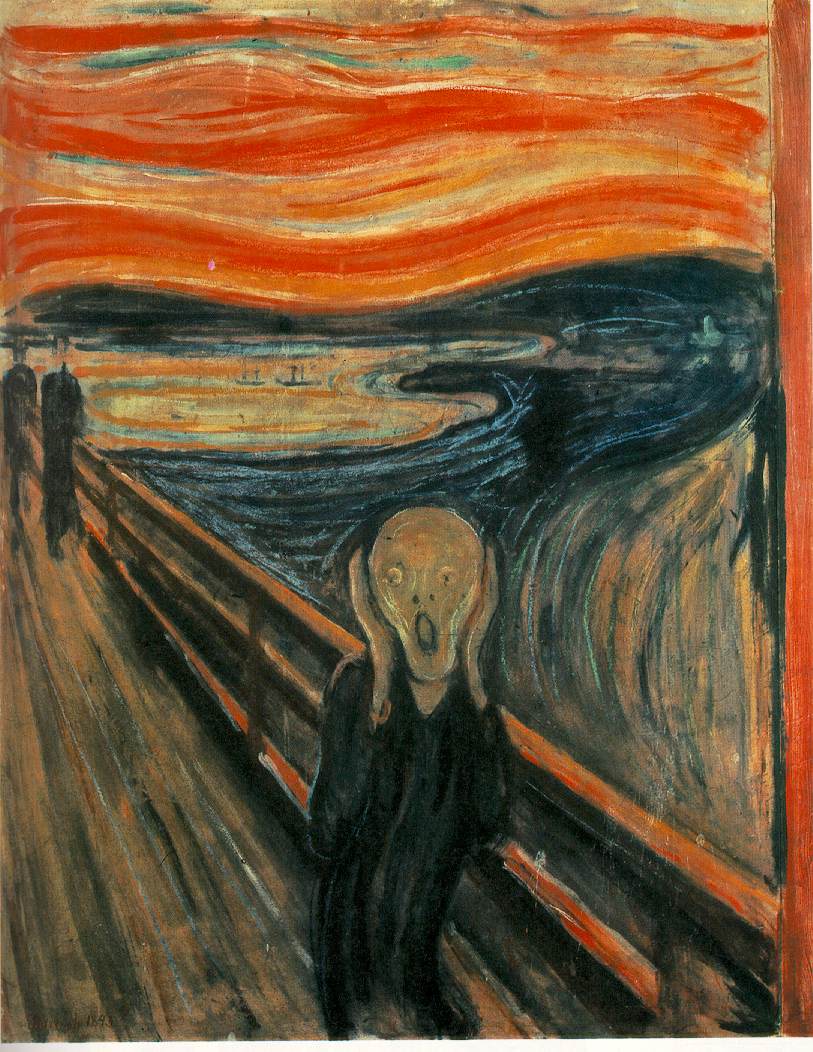
There is a dreadful loneliness in grieving. Even though my whole family were grieving for the loss of a brother, sister, mother, father, uncle, aunt, brother-in-law, sister-in-law it became a strange solitary process where we were united in our tragedy but it all seemed so abstract, so detached and we were unable to console each other, such was the magnitude of our loss. My head kept replaying the awful truth - two deaths in one night, three deaths in a week and four deaths in a month. It was as though my brain needed to constantly replay the whole catastrophe in order for it to make some kind of sense before I could start to come to terms with my loss. I clearly was still suffering immense shock and I reeled from the intensity of it.
On the day that my mother died, the journey home to Scotland was arduous and protracted. I wept over and over as my partner patiently drove the four hundred miles or so in one long journey so that we could get there as soon as possible. I felt bad that my step-brother and his wife had to deal with undertakers and such like on my behalf and I needed to get there to relieve them of such a dreadful burden. It was particularly hard for them as my step-father lay dying whilst his wife had passed away in the next room. I couldn’t imagine the torture this must have created for them all.
It was with a very heavy heart that I knocked on the door of my mother’s home. Knowing that it wouldn’t be her opening the door to me as she had done a hundred times before made me weep at the finality of it all and I leaned heavily against the door frame to steady myself. My partner seeing my distress came swiftly and engulfed me as he held me tightly because he knew I was dreading so much and this was a first of many things to dread. The door opened and the ashen faces of my step-brother and his wife said it all – they’d no doubt had better days in their lives and what we were now experiencing was staring them in the face too. They ushered us in and I quickly went to see my step-father for I was concerned as to how he was coping.
Oh this gentle man who had loved my mother so late in her life was but a shadow of himself and in little more than a week since I had last seen him. The events of the day had taken their toll and the sparkling light in his eyes that was his love for my mother had faded with her passing. I saw my own deep grief in his eyes and it was the most painful reflection that I have ever seen. It was like shards of glass lacerating my heart, death by a thousand cuts, all over again. I hugged his frail, cancer ridden and emaciated body, careful not to break him, and we were silent in our grief but tears rolled down my face as the damn burst yet again.
Where my father had been a violent controlling man, H was as gentle and fun loving a creature you could ever meet. My mother blossomed in his love and care and he in hers. He was a true gentleman to whom people turned for advice and help and he never failed in his duty to be a good husband, brother, parent, friend and neighbour. He was a dapper old soul with exceptional manners and I was so grateful that he was in my mother’s life. He gave my mother a future full of love, hope and laughter where all she had known with my father was fear, pain, physical and mental torture. Her premature death at the age of 64 meant a cruel twist of fate that robbed her of perhaps the best years of her life. But in time I came to be grateful that if she was to die at that time then it was better she went first rather than her witnessing the painful and deeply sad passing of her husband.
It was a long night fielding calls from brothers, sisters, relatives and friends. My head felt like it would burst having to repeat the details of her death, plans for funeral arrangements over and over again. It was like planning a military operation simply because my mother had 9 surviving children, two sisters and one brother and a smattering of other relatives and they all needed to be at her funeral. Finally the phone went silent for the night and myself, my partner, H’s son and daughter in law got down to the business of drinking ourselves to a standstill as all good Glaswegians do in times of sadness, happiness or indeed just because the sun rose again that day. We don’t need much excuse to get ‘tired and emotional’ as it is called back home - the opening of a crisp packet would probably make it onto the list of things to pop a can or two about. I badly needed a drink as all day emotions were running high and simply because I was the one there, answering the phone to my grieving family, I became by default the counsellor, mentor, parental figure for my siblings who were so deeply lost in their grief too and looking for any kind of reassurance that the world wasn’t imploding in on itself. When I replay this day in my mind, I am incredulous that I survived it, as to take on the grief of your siblings as well as your own seems almost too bizarre to comprehend. I clearly remember almost standing outside of myself as autopilot kicked in and I took call after call after call. I can only think that my years of being a senior manager in a professional environment and with all the training that went with that privilege had kicked in and I treated the whole scenario as a project, problem solving exercise that needed to be addressed. It was clearly a coping mechanism that got me through those few distressing hours.
The funeral took place some seven days later; an inordinately long time for my mother’s body to remain unburied but as she had died on a bank Holiday weekend, as coincidentally had my father the previous month, then everything ground to a halt as arrangements could not begin to be made until the following Tuesday. I felt such immense frustration and there were times I got cabin fever from being holed up whilst giving my step family some respite by helping to take care of my step-father as he fought his battle. The funeral arrangements were not without problems and as with all families there were misunderstandings, petty grievances from years before aired once more, alliances rebuilt only to be broken down the next day because grief is a hard task master that demands maturity at a time when all that surfaces is a lost, bewildered and angry child needing the safe haven of a parent to run to. It is almost ridiculous to feel like an orphan when you are in your mid 30’s but simply put that is how every one of us felt at the loss of both parents in such close proximity.
Shortly before the funeral my step-father’s family took him back to his old family home where they provided round the clock care and to allow us to grieve with some privacy. It is with great respect and with some discomfort that you dispose of your parent’s worldly goods. Rooting through drawers and cupboards throws up a mixture of old bric-a-brac, old photographs of happier times you forgot or sad fearful times you can’t forget. It took a few days of constant graft, giving possessions to charities, throwing out things that you hope they would approve of as rubbish and not something that harboured a dear memory for them, allowing family to choose a treasured piece of jewellery to remember her by. But none of it really matters in the scheme of things for possessions are meaningless clutter and it is your memories that keeps them alive; their names uttered on your lips as you talk about them with others who share your loss and share your history and share your deep personal grief.
Finally I left her house and turned to close the door behind me. The home that was once full of love and warmth now echoed a barren and empty sound as the door closed heavily. She was gone from this place and the realisation filled me with dread for the future because I knew that she was no longer going to be part of it. I had closed that door knowing it would be the last time I would hear the peculiar noise it made as the dodgy latch kicked into place; I had closed it knowing that I would never see that door again; knowing that I couldn’t ever come home again for a wee cup of tea with my wee Glasgow mammy; knowing that I would have to find my own sense of ‘well done’ because she was no longer there to tell me that; this was going to be a mammoth task because no one told me ‘well done’ quite as good as my wee mammy ever did - I wasn't up to the task.
Several hours later, several drinks later and sobbing uncontrollably in my home in England, I picked up my phone and dialled her home phone over and over but no one answered. I knew her home was dark, empty and completely abandoned but grief made me hope against hope and with complete irrationality I wished to God that she would pick up the phone and tell me that she lived to fight another day. I understood just how helpless my brothers and sisters had felt when I’d fielded their calls but this time there was no one to answer the phone to me. Oblivion called.
Showing posts with label funerals. Show all posts
Showing posts with label funerals. Show all posts
Monday, 22 September 2008


Thursday, 24 April 2008
Part 5 - The Catastrophic effect - A retrospective account
Want to read part 1?
Brandy slid down my throat, burning a path through my oesophagus on the way to my stomach. I shuddered at the hot harsh taste from a drink I was none too fond of. John had poured large measures and in the absence of anything else alcoholic, it would have to do for now. He raised his glass looked at Mark and me and said, “Cheers, here’s to the old man, God bless him, and to uncle Iain too. May God welcome them even though they were a pair of toerags from time to time!“. He threw back his head and gulped a large amount of the brandy before walking towards an armchair and flopping down like a rag doll. The last few weeks of misery were etched on his face; gaunt with dark circles beneath cheerless blue eyes. I felt his pain as I watched him struggle with his exhaustion and grief.
“How are you John?”, I asked, desperate to know how he was coping. He ran his hand through his dark brown hair before knocking back another large gulp of brandy. He looked past me staring vacantly into the distance. For a moment I thought he was going to cry but he stood up, strolled over to the brandy bottle and refilled his glass with a four finger deep measure. I wanted to caution care but this was no ordinary time for us, no run of the mill situation and “if you couldn’t have a drink now then when could you?”, I asked myself.
Leaning his arm on the mantelpiece, he turned towards me and finally held my gaze. “I feel like hell, Mob. It’s been a nightmarish two weeks, a real rollercoaster of emotions. Dad was still a grumpy old bugger but he was scared and that was hard to watch. I wouldn’t wish it upon anyone to watch a parent die like that, no matter what they’d said or done in life".
“I’m sorry and I know this is still very raw for you, but how was it, how did he cope at the end?” Perhaps it was morbid of me, kind of like rubber-necking at a road accident but I felt it was important for me to know the details so I could empathise with him, get the complete picture of just how awful it must have been for him and dad.
John walked back to the armchair, placed his drink on a side table and sunk down into the drab and uncomfortable burgundy leatherette chair that had been my father’s favourite for twenty years or so. I’d only seen my father once in this apartment some two years before, sitting in the same chair that John now occupied. It had been a short and depressing visit made out of guilt that I hadn’t seen him in such a long time and made out of curiosity to see just how he had faired and if there were any changes, regrets, apologies. I’d been shocked and saddened to see him try to warm his hands by the side of a clothes iron that he would plug in for that very purpose for he couldn’t afford to have his gas fire fixed. So much of what I felt for him was a complex set of emotions that ranged from hatred to pity but never love. But that day I felt compassion for a man haunted by his addictions; a victim of his learned behaviour from his violent father before him and a victim of circumstances borne out of a rough Glaswegian culture that endorsed domestic violence as almost a right-of-passage for a generation born at the time of the First World War. I had his fire fixed and paid his quarterly heating bills thereafter; I didn’t love him but neither did I hate him anymore; I couldn’t walk away and leave the man to freeze for the rest of his life in a city that was on the same latitude as Canada and frequently published record low temperatures. He got practical help and money from me in lieu of love.
His appartment was alien to me; he’d moved here long after I had fled the family home at fifteen to go and stay with a friend so I could continue my studies in my attempt to make a better life for myself. The apartment smelled of neglect and I felt sorrow for a life not well lived that had ended in an alcoholic haze, in pain and isolation from his family. There was a hollow echo to our conversation as though there was nothing of substance, no warmth here to cushion the sound of our words. It had a forlorn and desolate atmosphere with threadbare rugs placed on the dusty floor that was covered in cheap cracked linoleum where grimy ancient floorboards peaked through. The bare light bulb hanging from the nicotine stained rose holder in the ceiling streamed out naked light and cast strange shadows on the grubby and torn wallpapered walls of the room. The thick aroma of stale beer and cigarettes hung heavily in the air, a testament to the lifestyle that had brought my father to his knees with lung cancer. Years of his own disregard for his comfort and welfare were evident everywhere you glanced. A quick inspection of his kitchen had left me breathless; it was so dirty it should have been condemned and if the cancer hadn’t carried him off then surely to God, Ecoli would have done for him instead. A swift examination of his cupboards found no food for his consumption but instead offered up a bizarre collection of empty scotch bottles, about a hundred in total. For why he had started this strange collection, I do not know. My rapid troll through his apartment told me all I needed to know of the man of late; squalidness, neglect and loneliness reeked from every aspect of his small home. I suddenly felt deeply ashamed and sorrowful that his life had come to this; living with no real pride or respect for himself, no apparent signs of care and attention by himself or from anyone else.
“John?”, I turned my face back towards my brother to prompt him to come back at me; to at least try to relate some of those two weeks with dad. That way I could spare him a bit and share his narrative with our brothers and sisters as they arrived to ask the same questions over and over.
“Sorry”, he apologised. “I was watching you scan the room; you’ve got the same shock and disgust on your face that I must have had when I saw it two weeks ago. That’s the reason I was here in the first place”, he offered, as the start of his narrative as to how it was he who happened to be here in Glasgow with our dying father when he usually lived down south like me.
“Christ John, the place is a dive, a bloody squat. I don’t remember it being this bad when I saw him two years ago”. I wondered if perhaps his death had suddenly made me look much more closely at everything; brought things into a stark reality that I couldn’t hide from.
“Exactly what I thought Mob. I couldn’t believe the deterioration in the flat and in him either. But there’d been a flooding from the apartment above and from what I can gather he’d just left it, didn’t bother to sort it out at all. That’s why the place smells so musty”, he offered, as an explanation for the shambolic environment we were sitting in. I nodded my head in agreement because the all engulfing smell made me feel I’d develop consumption if left to wallow in such surroundings for more than a day or two. It was no wonder why the doctors had diagnosed pleurisy when my father was first admitted to hospital.
“Dad called me out of the blue”, he continued, “asked me if I had a couple of weeks to spare to come up and help him decorate. As I was between jobs, I thought what the hell. A couple of weeks in the old homeland would be just what I needed to stave off the boredom until my next contract started. But I knew when I saw him, he was clearly very ill and that the decorating plea for help was his way of getting me here to help him. He never said it but I’m sure he knew it was serious, had probably been in pain for months and only decided to do something about it when it was too much for him to handle”.
“Oh dear god almighty John, what must he have gone through being isolated and scared like that for him to have finally sent out a distress call to you?”, I said, more out loud to myself. “It’s not as if you kept in touch that often is it?”, I asked, looking at him for confirmation or denial that he’d been a better child than I had been.
“No, you’re right. Our contact was sporadic at best so I was as surprised as you are that he made the call”.
Trying to imagine Dad’s last few weeks of loneliness and terror was like a bolt of lightening to my heart. I closed my eyes to steel myself because I was so deeply mortified that I had let my father’s life come to a close in such a way. The if’s the if’s the if’s......If only I had known, if only he had said earlier, if only I had cared.... They went on and on pounding my brain but it was futile to think what if? But you do it anyway.
“And so”, John carried on, “I got here albeit under false pretences, realised what was going on, got him into hospital and the rest is history. I called the family, let everyone know the regular updates and sat and waited, just waited because there was nothing else I could do. The old man was in and out of consciousness until the last few hours but at least the morphine kept the worst at bay. He was delusional from time to time but he was compos mentis for enough of the time he managed to spend with Alex", he said in conclusion.
“Alex, Alex is here? Where on earth is he then?", I asked in astonishment for I hadn’t even considered that any of my other siblings had made it home.
“Oh, Christ I thought I’d told you. He turned up yesterday afternoon. He’s off picking up dad’s clothes and other stuff from the hospital. They asked yesterday that someone come in and do that today. Thankfully Alex offered to do that for I have seen enough of that place to sicken me for the rest of my life”
I was relieved that John had not been alone when my father passed away and appreciative that Alex had made it home so dad could see another of his son’s in his final hours. With that thought, my brother Alex walked into the apartment. I stood up and we walked towards each other finally culminating in a tearful hug of brother and sister lamenting the loss of a parent.
Now there were enough of us present to start the planning of the funeral of a man, a father, who had been robbed of us in life by alcohol and now had robbed us again with his death.
Brandy slid down my throat, burning a path through my oesophagus on the way to my stomach. I shuddered at the hot harsh taste from a drink I was none too fond of. John had poured large measures and in the absence of anything else alcoholic, it would have to do for now. He raised his glass looked at Mark and me and said, “Cheers, here’s to the old man, God bless him, and to uncle Iain too. May God welcome them even though they were a pair of toerags from time to time!“. He threw back his head and gulped a large amount of the brandy before walking towards an armchair and flopping down like a rag doll. The last few weeks of misery were etched on his face; gaunt with dark circles beneath cheerless blue eyes. I felt his pain as I watched him struggle with his exhaustion and grief.
“How are you John?”, I asked, desperate to know how he was coping. He ran his hand through his dark brown hair before knocking back another large gulp of brandy. He looked past me staring vacantly into the distance. For a moment I thought he was going to cry but he stood up, strolled over to the brandy bottle and refilled his glass with a four finger deep measure. I wanted to caution care but this was no ordinary time for us, no run of the mill situation and “if you couldn’t have a drink now then when could you?”, I asked myself.
Leaning his arm on the mantelpiece, he turned towards me and finally held my gaze. “I feel like hell, Mob. It’s been a nightmarish two weeks, a real rollercoaster of emotions. Dad was still a grumpy old bugger but he was scared and that was hard to watch. I wouldn’t wish it upon anyone to watch a parent die like that, no matter what they’d said or done in life".
“I’m sorry and I know this is still very raw for you, but how was it, how did he cope at the end?” Perhaps it was morbid of me, kind of like rubber-necking at a road accident but I felt it was important for me to know the details so I could empathise with him, get the complete picture of just how awful it must have been for him and dad.
John walked back to the armchair, placed his drink on a side table and sunk down into the drab and uncomfortable burgundy leatherette chair that had been my father’s favourite for twenty years or so. I’d only seen my father once in this apartment some two years before, sitting in the same chair that John now occupied. It had been a short and depressing visit made out of guilt that I hadn’t seen him in such a long time and made out of curiosity to see just how he had faired and if there were any changes, regrets, apologies. I’d been shocked and saddened to see him try to warm his hands by the side of a clothes iron that he would plug in for that very purpose for he couldn’t afford to have his gas fire fixed. So much of what I felt for him was a complex set of emotions that ranged from hatred to pity but never love. But that day I felt compassion for a man haunted by his addictions; a victim of his learned behaviour from his violent father before him and a victim of circumstances borne out of a rough Glaswegian culture that endorsed domestic violence as almost a right-of-passage for a generation born at the time of the First World War. I had his fire fixed and paid his quarterly heating bills thereafter; I didn’t love him but neither did I hate him anymore; I couldn’t walk away and leave the man to freeze for the rest of his life in a city that was on the same latitude as Canada and frequently published record low temperatures. He got practical help and money from me in lieu of love.
His appartment was alien to me; he’d moved here long after I had fled the family home at fifteen to go and stay with a friend so I could continue my studies in my attempt to make a better life for myself. The apartment smelled of neglect and I felt sorrow for a life not well lived that had ended in an alcoholic haze, in pain and isolation from his family. There was a hollow echo to our conversation as though there was nothing of substance, no warmth here to cushion the sound of our words. It had a forlorn and desolate atmosphere with threadbare rugs placed on the dusty floor that was covered in cheap cracked linoleum where grimy ancient floorboards peaked through. The bare light bulb hanging from the nicotine stained rose holder in the ceiling streamed out naked light and cast strange shadows on the grubby and torn wallpapered walls of the room. The thick aroma of stale beer and cigarettes hung heavily in the air, a testament to the lifestyle that had brought my father to his knees with lung cancer. Years of his own disregard for his comfort and welfare were evident everywhere you glanced. A quick inspection of his kitchen had left me breathless; it was so dirty it should have been condemned and if the cancer hadn’t carried him off then surely to God, Ecoli would have done for him instead. A swift examination of his cupboards found no food for his consumption but instead offered up a bizarre collection of empty scotch bottles, about a hundred in total. For why he had started this strange collection, I do not know. My rapid troll through his apartment told me all I needed to know of the man of late; squalidness, neglect and loneliness reeked from every aspect of his small home. I suddenly felt deeply ashamed and sorrowful that his life had come to this; living with no real pride or respect for himself, no apparent signs of care and attention by himself or from anyone else.
“John?”, I turned my face back towards my brother to prompt him to come back at me; to at least try to relate some of those two weeks with dad. That way I could spare him a bit and share his narrative with our brothers and sisters as they arrived to ask the same questions over and over.
“Sorry”, he apologised. “I was watching you scan the room; you’ve got the same shock and disgust on your face that I must have had when I saw it two weeks ago. That’s the reason I was here in the first place”, he offered, as the start of his narrative as to how it was he who happened to be here in Glasgow with our dying father when he usually lived down south like me.
“Christ John, the place is a dive, a bloody squat. I don’t remember it being this bad when I saw him two years ago”. I wondered if perhaps his death had suddenly made me look much more closely at everything; brought things into a stark reality that I couldn’t hide from.
“Exactly what I thought Mob. I couldn’t believe the deterioration in the flat and in him either. But there’d been a flooding from the apartment above and from what I can gather he’d just left it, didn’t bother to sort it out at all. That’s why the place smells so musty”, he offered, as an explanation for the shambolic environment we were sitting in. I nodded my head in agreement because the all engulfing smell made me feel I’d develop consumption if left to wallow in such surroundings for more than a day or two. It was no wonder why the doctors had diagnosed pleurisy when my father was first admitted to hospital.
“Dad called me out of the blue”, he continued, “asked me if I had a couple of weeks to spare to come up and help him decorate. As I was between jobs, I thought what the hell. A couple of weeks in the old homeland would be just what I needed to stave off the boredom until my next contract started. But I knew when I saw him, he was clearly very ill and that the decorating plea for help was his way of getting me here to help him. He never said it but I’m sure he knew it was serious, had probably been in pain for months and only decided to do something about it when it was too much for him to handle”.
“Oh dear god almighty John, what must he have gone through being isolated and scared like that for him to have finally sent out a distress call to you?”, I said, more out loud to myself. “It’s not as if you kept in touch that often is it?”, I asked, looking at him for confirmation or denial that he’d been a better child than I had been.
“No, you’re right. Our contact was sporadic at best so I was as surprised as you are that he made the call”.
Trying to imagine Dad’s last few weeks of loneliness and terror was like a bolt of lightening to my heart. I closed my eyes to steel myself because I was so deeply mortified that I had let my father’s life come to a close in such a way. The if’s the if’s the if’s......If only I had known, if only he had said earlier, if only I had cared.... They went on and on pounding my brain but it was futile to think what if? But you do it anyway.
“And so”, John carried on, “I got here albeit under false pretences, realised what was going on, got him into hospital and the rest is history. I called the family, let everyone know the regular updates and sat and waited, just waited because there was nothing else I could do. The old man was in and out of consciousness until the last few hours but at least the morphine kept the worst at bay. He was delusional from time to time but he was compos mentis for enough of the time he managed to spend with Alex", he said in conclusion.
“Alex, Alex is here? Where on earth is he then?", I asked in astonishment for I hadn’t even considered that any of my other siblings had made it home.
“Oh, Christ I thought I’d told you. He turned up yesterday afternoon. He’s off picking up dad’s clothes and other stuff from the hospital. They asked yesterday that someone come in and do that today. Thankfully Alex offered to do that for I have seen enough of that place to sicken me for the rest of my life”
I was relieved that John had not been alone when my father passed away and appreciative that Alex had made it home so dad could see another of his son’s in his final hours. With that thought, my brother Alex walked into the apartment. I stood up and we walked towards each other finally culminating in a tearful hug of brother and sister lamenting the loss of a parent.
Now there were enough of us present to start the planning of the funeral of a man, a father, who had been robbed of us in life by alcohol and now had robbed us again with his death.
Wednesday, 16 April 2008
Part 4 - The Catastrophic Effect - A retrospective account
Want to read part 1?
After a simple breakfast consisting of coffee and toast and an emotional hug of the cat goodbye we started our journey north to Scotland. The deaths of my father and of uncle Iain last night have left me feeling raw and confused and naturally somewhat subdued. Mark has insisted on doing the driving for I am too distracted to be safe behind the wheel of a car. Once again I was thankful for the strength and kindness of this man and how he’d marshalled me along since returning from Minneapolis.
As we speed along the m1 and m6 motorways, I think about the scores of times that I’d undertaken this journey; times when the excitement of seeing family and friends was palpable and uplifting and my heart soared for they were sorely missed. A deep homesickness had been prevalent in my early years away and I was never happier and with a real lightness of heart just to know that in a few hours we would be in the land of tartan, clean air, more mountains than you could shake a stick at and sharing sharp banter with a population of natural comedians.
My home city of Glasgow had the dubious moniker of ‘home of the deep fried Mars bar’; I’d never eaten one but I had no trouble imagining the combination of sickly sweet caramel, fondant and chocolate encased in a greasy batter and knew it would be enough to make me heave up the lining of my stomach. This atrocious concoction, loved by many, was swiftly followed in popularity by the deep fried pizza. Cleary ingesting both these delicacies on a regular basis was a death by clogged artery suicide; but that’s Glaswegians for you, the constitution of an ox with an attitude of ‘manyana’ to all things risky in life.
“Aye hen, a’ll gie it aw up the morra when a’m no sae pished and hungry”, was a popular retort of many a drunkard when challenged by some sour faced auld biddy feigning disgust at the inappropriateness of the drunk man’s evening repast. It could usually be relied upon to be followed up by a quick aside of “An’ away an sort that sour auld face aw yours oot cause a’ll be sober in the mornin’ but you’ll still look like the fecking grim reaper huvin a bad night oot, mrs. Ah sure hope you're no married ‘cause God help the poor bugger if he’s huvin tae wake up tae that old fisog on a daily basis”, he would lob as a parting shot, with grease drippin' doon his chin.
The warm and down-to- earth attitude, the simple cheek and the never short of a quick retort of Glaswegians makes for an abundance of humour in everyday situations and life. Although a city, Glasgow could easily be a big village for everyone knows everyone or at least will know someone who knows someone who knows you, if you get my drift. Talk about six degrees of separation - in Glasgow it’s more than likely three. And you can’t stand at a bus stop for someone telling you a tale or if the bus is long enough in coming, their whole life story. It is well known that most Glaswegians suffer from the same affliction to talk the hind leg off a donkey for we are genetically predisposed to do so and it is this that I miss most since leaving home; well, that and someone peeling open a well wrapped paper poke, (bag), that wafts out the tantalising aroma of volcanically hot freshly cooked chipped potatoes doused in salt and vinegar and calmly seeing if, “you want wan hen?”, as he/she pokes the bag in your direction. No one is a stranger for long in Glasgow, no one, irrespective of colour, creed, shape or size.
Reminiscing about my clan folks and their ways fills me with warmth and a deep appreciation of home and I smile for the first time in an age. It is a magic place to be. I feel comforted and slowly relax back into my seat, close my eyes and find the gentle hum of the car soothing.
Normally my natural ebullience at heading home would have me playing my favourite songs at top whack whilst I willed every hour on the road to be a minute so that I could be home sooner. Sometimes I flew home for the occasional long weekend when time was of the essence. But mostly we drove home for there was always a list of food orders as long as my arm to bring back to the Scottish diaspora exiled down south in search of better paid jobs and careers. On those return journeys back to England the car boot was laden with the type of Scottish fare that we had grown up eating and taken for granted but had since become manna from heaven purely because they were unavailable outside of the Scottish borders.
For months after returning home to England we could be found snaffling rare Scottish treats such as neeps and tatties, bridies, mince and dough balls, square, (Lorne) sausage, tattie scones, Scottish plain and pan bread, bread rolls, Scottish steak and sausage pie, Scotch pie, clootie dumplings and black pudding. Several generations of Scots had been reared on this stuff and as wains, (kids), it stuck to our ribs and gave an extra layer of protection from those bitter north winds that would whip around our wee bodies as we ‘played ootside tae gie oor mammies peace and quiet fur a wee while’.
But what of the legendary Scottish haggis you might ask? Well, you could stick your haggis as far as I’m concerned; to this day I can’t imagine swallowing and keeping down a pile of sheep’s innards cooked in a sheep’s belly. It’s no great mystery to me that you need to down a quick shot of scotch after you swallow a mouthful of haggis; you require it to quell the need to propel it rapidly across the room as your belly rejects it in record time. It’s no wonder that every time I see someone projectile vomiting I assume I am witnessing them having their first and last taste of haggis. It’s a common fallacy that just because you are Scottish you will be eating haggis by the poundage and feeling all the better for it.
I certainly fare no better with shortbread either. About a ton of flour, at least a block of butter and a pound of sugar creamed together and baked with millions of fork pricks all over it then left in a tin for months to dry out; it has no trouble lodging itself firmly in my throat. It’s handy if you want to shut me up for a while - and many do - because it totally sucks every piece of moisture from my mouth and it takes at least a pint of liquid to rehydrate it again.
Still, haggis and shortbread aside, “everything in moderation”, and “a little of what you fancy does you good”, being the cries of the war baby generation of our parents so we take heed and limit ourselves to scoffing smaller and healthier amounts than they did. We also take care to grill rather than fry in copious amounts of lard as was once done by our grannies and their grannies before them. And so it is, all washed down by a huge glug of Irn-Bru or if you are even luckier, a wee dram or two of the finest malt whiskey. We might hail from ‘Heart Attack City’ but we don’t have to adhere to the lifestyle and habits that has made sure Glasgow has become a worldwide centre of excellence should you suffer a myocardial infarction north of the border. No wonder it is so with the abundance of raw material it has to work with.
But, on this journey home I have no appetite, no need for sustenance or goodies as it feels greedy, feels disrespectful to be thinking of enjoying and spoiling ourselves in the face of the loss of life. I have no unadulterated joy at arriving and catching up with friends and family for how can I when family numbers are dwindling and grief is dominating my every thought and move. The time moves slowly as the miles stretch ahead of us and I suggest we take a break. Mark must be hungry even if I’m not and so we slip off the motorway at the next available services; plastic soulless places where you can buy burgers and chips, stodgy cloying meals that have been left languishing under hot lights for hours that only the very ravenous of people could eat out of desperation or with a serious lack of palate. Nevertheless, with a quick trip to the loo, followed by a weak and tasteless cup of tea and a lacklustre sandwich, we return to the car to continue onwards.
Mark is as downcast as I am for it is his first experience of death at close quarters. “I can’t help but think about my own parents mortality now; can’t imagine what it would be like to lose one of them”, he says trying hard to empathise with what I might be feeling.
“I don’t think you need worry about that too much just yet”, I respond, trying to put his mind at rest “your parents are quite a bit younger than my dad and at seventy eight he’s had a good innings".
“How old is your mother now, she’s quite a bit younger than your father isn’t she?” he looks for a reminder because he can never quite remember.
“She’ll be sixty four in May, in no time at all”, I say, suddenly musing as to what I should get her as a gift this year. It seems unfeeling and trivial to think about birthday presents when there are funerals to be planned but we’re sailing in uncharted territory and life must go on in spite of everything.
Every year that my mother is alive is a gift for only four years previously she had a massive heart attack, one that should have ended her life. As we held vigil overnight in Intensive Care during those first crucial twenty four hours, doctors gave no hope that she would survive the night let alone much longer. But, through sheer force of will and a determination to survive she was hailed a fighter and a miracle woman. What science couldn’t do alone was helped by fortitude of steel from a wee lassie from Glasgow who was certainly going nowhere as her time wasn’t up. Survive she did but so much of her heart had been damaged to the point that she was existing on a cocktail of drugs such as warfarin, an anticoagulant that thinned her blood, making it easier for her heart to pump the blood around her body. But all too often her heart struggles to cope and her lungs fill with fluid when it can’t work as efficiently as it could do. It’s at times like that she is hospitalised and her condition stabilised and she lives to fight another day. My wee miracle mammy; a woman with a zest for life; compassion for others she sees as worse off than herself and a woman deeply in love with her par amour Henry. It is my belief that this deep love she has found so late in life is what keeps her going for I have never seen her so happy to be alive. She embraces every moment of every day and Henry is the epicentre of her universe as she is his.
I am thankful he is in her life because I cannot always be there for her. Work commitments demand so much of my time and it is easy to become selfish and to place my own needs above hers. Too often I claim workload and distance as a barrier to helping when she might need me. Too often I rely upon my sister Fiona to fly in from Luxembourg to do what I should be sharing with her. I convince myself that at least now her family is grown and being a housewife affords her the time to be there for mum. Too often I am simply not in the country and it’s all over bar the shouting by the time get back to the UK to find my sister has once again shouldered the brunt of her care. I help financially but I should do more; offer more practical help but my mother refuses, tells me she’s proud of me and my career and that she wouldn’t hear of me cutting short a business trip to come home “just because she’s feeling a bit under the weather”. Too often I am too ready to believe her and carry on with my life in glorious isolation of her and her problems. But now that my father and uncle have died in such a staggeringly close timeframe, I am starkly aware of how fragile a hold we have on life. I resolve to make more of an effort and put her first at this time of her life. To paraphrase Oscar Wilde, ‘it is a tragedy to lose one parent, to lose two is just carelessness’. Providence has given me a bum deck of cards to deal with but in doing so I am reminded of how precious my surviving parent has become to me.
After five hours and several traffic jams our journey is coming to a close and soon I must face the reality of my father’s empty home and my brother’s grief stricken state. Mark tries to distract me as we pass by Uddingston and Daldowie crematorium where my father’s ashes will rest. All too soon we will be here saying goodbye to a man that I am not sure I will miss. Shortly after, we pull up outside my father’s home. My brother waiting eagerly for our arrival steps from the house looking ashen and deeply sad. Once more I am overwhelmed by his grief and hold him tightly in a wretched bid to say sorry, to make up for leaving him to deal with this on his own.
After a simple breakfast consisting of coffee and toast and an emotional hug of the cat goodbye we started our journey north to Scotland. The deaths of my father and of uncle Iain last night have left me feeling raw and confused and naturally somewhat subdued. Mark has insisted on doing the driving for I am too distracted to be safe behind the wheel of a car. Once again I was thankful for the strength and kindness of this man and how he’d marshalled me along since returning from Minneapolis.
As we speed along the m1 and m6 motorways, I think about the scores of times that I’d undertaken this journey; times when the excitement of seeing family and friends was palpable and uplifting and my heart soared for they were sorely missed. A deep homesickness had been prevalent in my early years away and I was never happier and with a real lightness of heart just to know that in a few hours we would be in the land of tartan, clean air, more mountains than you could shake a stick at and sharing sharp banter with a population of natural comedians.
My home city of Glasgow had the dubious moniker of ‘home of the deep fried Mars bar’; I’d never eaten one but I had no trouble imagining the combination of sickly sweet caramel, fondant and chocolate encased in a greasy batter and knew it would be enough to make me heave up the lining of my stomach. This atrocious concoction, loved by many, was swiftly followed in popularity by the deep fried pizza. Cleary ingesting both these delicacies on a regular basis was a death by clogged artery suicide; but that’s Glaswegians for you, the constitution of an ox with an attitude of ‘manyana’ to all things risky in life.
“Aye hen, a’ll gie it aw up the morra when a’m no sae pished and hungry”, was a popular retort of many a drunkard when challenged by some sour faced auld biddy feigning disgust at the inappropriateness of the drunk man’s evening repast. It could usually be relied upon to be followed up by a quick aside of “An’ away an sort that sour auld face aw yours oot cause a’ll be sober in the mornin’ but you’ll still look like the fecking grim reaper huvin a bad night oot, mrs. Ah sure hope you're no married ‘cause God help the poor bugger if he’s huvin tae wake up tae that old fisog on a daily basis”, he would lob as a parting shot, with grease drippin' doon his chin.
The warm and down-to- earth attitude, the simple cheek and the never short of a quick retort of Glaswegians makes for an abundance of humour in everyday situations and life. Although a city, Glasgow could easily be a big village for everyone knows everyone or at least will know someone who knows someone who knows you, if you get my drift. Talk about six degrees of separation - in Glasgow it’s more than likely three. And you can’t stand at a bus stop for someone telling you a tale or if the bus is long enough in coming, their whole life story. It is well known that most Glaswegians suffer from the same affliction to talk the hind leg off a donkey for we are genetically predisposed to do so and it is this that I miss most since leaving home; well, that and someone peeling open a well wrapped paper poke, (bag), that wafts out the tantalising aroma of volcanically hot freshly cooked chipped potatoes doused in salt and vinegar and calmly seeing if, “you want wan hen?”, as he/she pokes the bag in your direction. No one is a stranger for long in Glasgow, no one, irrespective of colour, creed, shape or size.
Reminiscing about my clan folks and their ways fills me with warmth and a deep appreciation of home and I smile for the first time in an age. It is a magic place to be. I feel comforted and slowly relax back into my seat, close my eyes and find the gentle hum of the car soothing.
Normally my natural ebullience at heading home would have me playing my favourite songs at top whack whilst I willed every hour on the road to be a minute so that I could be home sooner. Sometimes I flew home for the occasional long weekend when time was of the essence. But mostly we drove home for there was always a list of food orders as long as my arm to bring back to the Scottish diaspora exiled down south in search of better paid jobs and careers. On those return journeys back to England the car boot was laden with the type of Scottish fare that we had grown up eating and taken for granted but had since become manna from heaven purely because they were unavailable outside of the Scottish borders.
For months after returning home to England we could be found snaffling rare Scottish treats such as neeps and tatties, bridies, mince and dough balls, square, (Lorne) sausage, tattie scones, Scottish plain and pan bread, bread rolls, Scottish steak and sausage pie, Scotch pie, clootie dumplings and black pudding. Several generations of Scots had been reared on this stuff and as wains, (kids), it stuck to our ribs and gave an extra layer of protection from those bitter north winds that would whip around our wee bodies as we ‘played ootside tae gie oor mammies peace and quiet fur a wee while’.
But what of the legendary Scottish haggis you might ask? Well, you could stick your haggis as far as I’m concerned; to this day I can’t imagine swallowing and keeping down a pile of sheep’s innards cooked in a sheep’s belly. It’s no great mystery to me that you need to down a quick shot of scotch after you swallow a mouthful of haggis; you require it to quell the need to propel it rapidly across the room as your belly rejects it in record time. It’s no wonder that every time I see someone projectile vomiting I assume I am witnessing them having their first and last taste of haggis. It’s a common fallacy that just because you are Scottish you will be eating haggis by the poundage and feeling all the better for it.
I certainly fare no better with shortbread either. About a ton of flour, at least a block of butter and a pound of sugar creamed together and baked with millions of fork pricks all over it then left in a tin for months to dry out; it has no trouble lodging itself firmly in my throat. It’s handy if you want to shut me up for a while - and many do - because it totally sucks every piece of moisture from my mouth and it takes at least a pint of liquid to rehydrate it again.
Still, haggis and shortbread aside, “everything in moderation”, and “a little of what you fancy does you good”, being the cries of the war baby generation of our parents so we take heed and limit ourselves to scoffing smaller and healthier amounts than they did. We also take care to grill rather than fry in copious amounts of lard as was once done by our grannies and their grannies before them. And so it is, all washed down by a huge glug of Irn-Bru or if you are even luckier, a wee dram or two of the finest malt whiskey. We might hail from ‘Heart Attack City’ but we don’t have to adhere to the lifestyle and habits that has made sure Glasgow has become a worldwide centre of excellence should you suffer a myocardial infarction north of the border. No wonder it is so with the abundance of raw material it has to work with.
But, on this journey home I have no appetite, no need for sustenance or goodies as it feels greedy, feels disrespectful to be thinking of enjoying and spoiling ourselves in the face of the loss of life. I have no unadulterated joy at arriving and catching up with friends and family for how can I when family numbers are dwindling and grief is dominating my every thought and move. The time moves slowly as the miles stretch ahead of us and I suggest we take a break. Mark must be hungry even if I’m not and so we slip off the motorway at the next available services; plastic soulless places where you can buy burgers and chips, stodgy cloying meals that have been left languishing under hot lights for hours that only the very ravenous of people could eat out of desperation or with a serious lack of palate. Nevertheless, with a quick trip to the loo, followed by a weak and tasteless cup of tea and a lacklustre sandwich, we return to the car to continue onwards.
Mark is as downcast as I am for it is his first experience of death at close quarters. “I can’t help but think about my own parents mortality now; can’t imagine what it would be like to lose one of them”, he says trying hard to empathise with what I might be feeling.
“I don’t think you need worry about that too much just yet”, I respond, trying to put his mind at rest “your parents are quite a bit younger than my dad and at seventy eight he’s had a good innings".
“How old is your mother now, she’s quite a bit younger than your father isn’t she?” he looks for a reminder because he can never quite remember.
“She’ll be sixty four in May, in no time at all”, I say, suddenly musing as to what I should get her as a gift this year. It seems unfeeling and trivial to think about birthday presents when there are funerals to be planned but we’re sailing in uncharted territory and life must go on in spite of everything.
Every year that my mother is alive is a gift for only four years previously she had a massive heart attack, one that should have ended her life. As we held vigil overnight in Intensive Care during those first crucial twenty four hours, doctors gave no hope that she would survive the night let alone much longer. But, through sheer force of will and a determination to survive she was hailed a fighter and a miracle woman. What science couldn’t do alone was helped by fortitude of steel from a wee lassie from Glasgow who was certainly going nowhere as her time wasn’t up. Survive she did but so much of her heart had been damaged to the point that she was existing on a cocktail of drugs such as warfarin, an anticoagulant that thinned her blood, making it easier for her heart to pump the blood around her body. But all too often her heart struggles to cope and her lungs fill with fluid when it can’t work as efficiently as it could do. It’s at times like that she is hospitalised and her condition stabilised and she lives to fight another day. My wee miracle mammy; a woman with a zest for life; compassion for others she sees as worse off than herself and a woman deeply in love with her par amour Henry. It is my belief that this deep love she has found so late in life is what keeps her going for I have never seen her so happy to be alive. She embraces every moment of every day and Henry is the epicentre of her universe as she is his.
I am thankful he is in her life because I cannot always be there for her. Work commitments demand so much of my time and it is easy to become selfish and to place my own needs above hers. Too often I claim workload and distance as a barrier to helping when she might need me. Too often I rely upon my sister Fiona to fly in from Luxembourg to do what I should be sharing with her. I convince myself that at least now her family is grown and being a housewife affords her the time to be there for mum. Too often I am simply not in the country and it’s all over bar the shouting by the time get back to the UK to find my sister has once again shouldered the brunt of her care. I help financially but I should do more; offer more practical help but my mother refuses, tells me she’s proud of me and my career and that she wouldn’t hear of me cutting short a business trip to come home “just because she’s feeling a bit under the weather”. Too often I am too ready to believe her and carry on with my life in glorious isolation of her and her problems. But now that my father and uncle have died in such a staggeringly close timeframe, I am starkly aware of how fragile a hold we have on life. I resolve to make more of an effort and put her first at this time of her life. To paraphrase Oscar Wilde, ‘it is a tragedy to lose one parent, to lose two is just carelessness’. Providence has given me a bum deck of cards to deal with but in doing so I am reminded of how precious my surviving parent has become to me.
After five hours and several traffic jams our journey is coming to a close and soon I must face the reality of my father’s empty home and my brother’s grief stricken state. Mark tries to distract me as we pass by Uddingston and Daldowie crematorium where my father’s ashes will rest. All too soon we will be here saying goodbye to a man that I am not sure I will miss. Shortly after, we pull up outside my father’s home. My brother waiting eagerly for our arrival steps from the house looking ashen and deeply sad. Once more I am overwhelmed by his grief and hold him tightly in a wretched bid to say sorry, to make up for leaving him to deal with this on his own.
Subscribe to:
Posts (Atom)